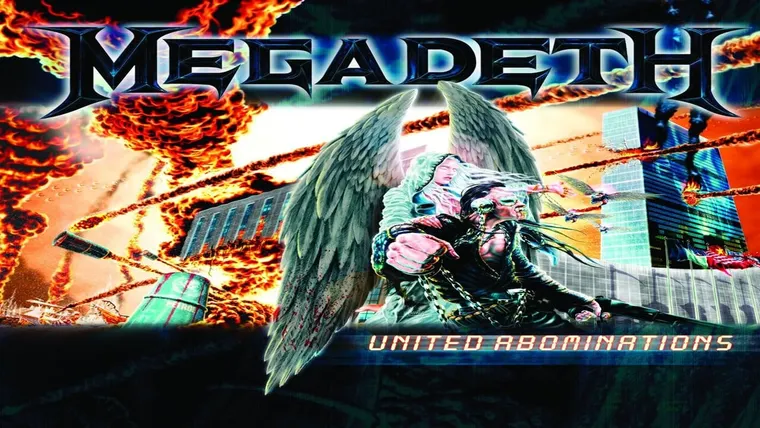
Released: May 15, 2007
United Abominations leaves few dots for the listener to connect. Dave Mustaine names governments, wars, weapons, media outlets, and the United Nations, then tells you where he stands. The question is whether Megadeth’s music can remain unpredictable when the lyrics tell you exactly what to think.
Released in North America on May 15, 2007, through Roadrunner, Megadeth’s eleventh studio album brought Mustaine together with guitarist Glen Drover, bassist James LoMenzo, and drummer Shawn Drover. Production was credited to Mustaine, Jeff Balding, and Andy Sneap, with Sneap also handling the mix and mastering. The sharp separation suits these arrangements. The kick has a hard edge, the rhythm guitars remain distinct through quick changes, and the leads cut across the songs without reducing everything to a blur.
Much of the unpredictability comes from the two guitarists. “Sleepwalker” moves from a clean opening into a jagged main riff, while Mustaine delivers his threats in short bursts that leave room for the guitars to answer. Its solo section passes from Mustaine to Drover instead of settling into one extended showcase. “Burnt Ice” pushes that exchange further. Short leads interrupt the early vocal lines, then splinter the song again as its meth-addicted subject sinks into desperation and paranoia. Those interruptions mirror the fractured thinking described in the lyric.
LoMenzo and Shawn Drover give the political material its shape. “Washington Is Next!” rides a gallop while the guitars keep climbing above it, adding melody as Mustaine moves deeper into prophecy and conspiracy. By the final title line, the band has created the escalation the words keep predicting. “Gears of War” uses repetition differently. Its palm-muted pattern moves like a production line, and the drums hit every stop and restart with it. Smart bombs and precision weapons are reduced to an assembly-line process. Even the horse-like drive of “Blessed Are the Dead” connects directly to its Four Horsemen imagery.
The title track exposes the risk. Spoken reports, mock broadcasts, and a long list of political grievances take up so much space that the band becomes backing music for an argument. The mid-paced riff and blunt chorus are easy to follow, but they have nowhere unexpected to go. “Amerikhastan” gets even more crowded. Drover and Mustaine trade leads throughout, yet the news references, wordplay, and spoken taunts pile up until the guitars are fighting to get a sentence in. The music stays busy long after the point has been nailed down.
The rerecorded “À Tout le Monde (Set Me Free),” featuring Cristina Scabbia, creates a different interruption. Her clear vocal gives the chorus another colour, and the quicker pace removes some of the original’s slow ache. It also directs attention toward a song Megadeth had already defined in 1994, just as this lineup is establishing its own identity. Placed between “Play for Blood” and “Amerikhastan,” it breaks the album’s train of thought to revisit familiar ground.
Can the music remain unpredictable when Mustaine has already supplied every conclusion? Yes, when the arrangement adds something the words cannot. The climbing guitars in “Washington Is Next!,” the mechanical lockstep of “Gears of War” and the fractured leads in “Burnt Ice” each deepen their subjects. When Mustaine turns the record into a lecture, the riffs end up waiting for him to finish. Megadeth says the most on United Abominations whenever he leaves enough room for the other three musicians to argue back.
A ThisDayInMetal exclusive by Rob Joncas, founder of DeadNoteMedia.
