Slayer – South of Heaven: Slayer Made Slower Sound More Evil

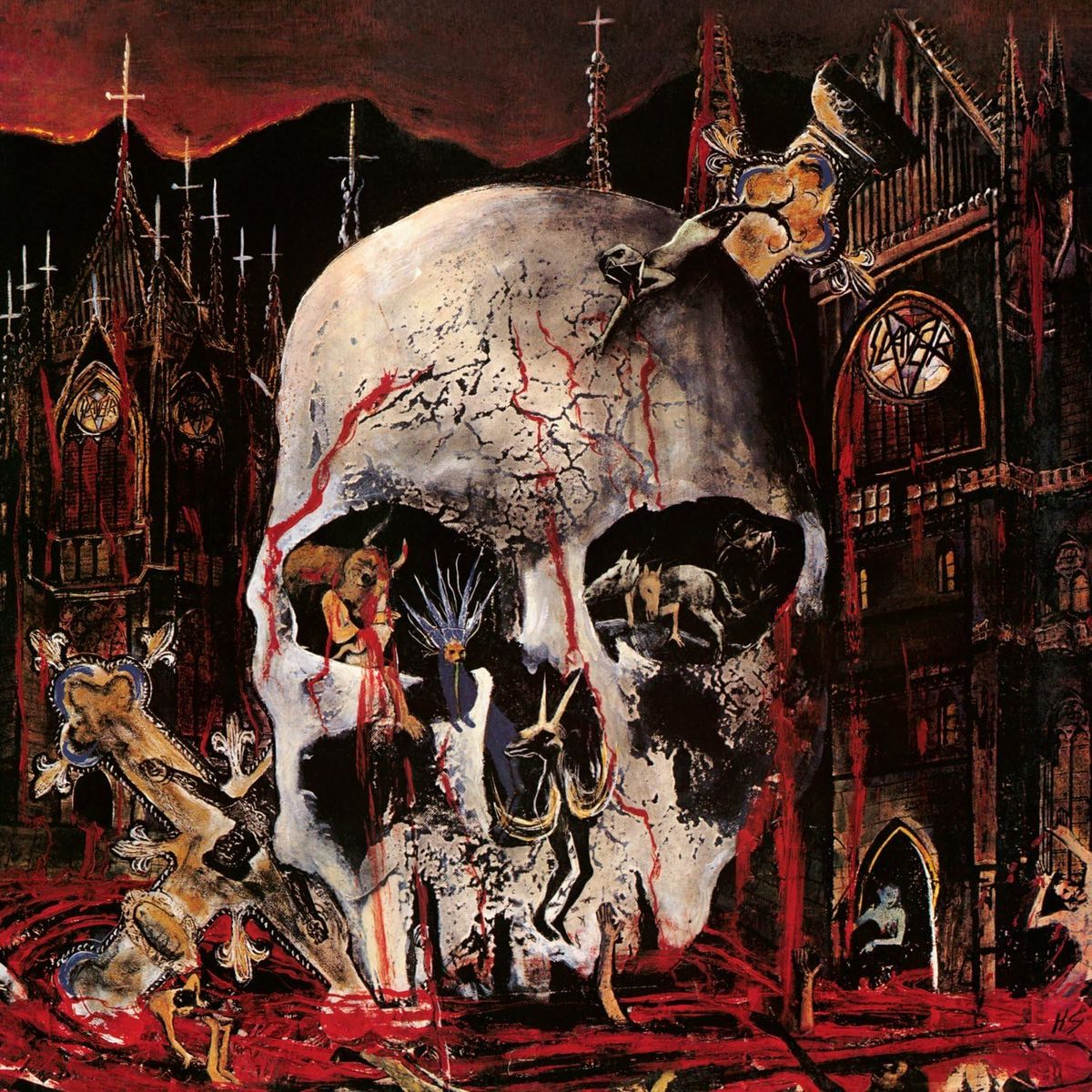
Released: July 5, 1988
Slayer had already proved they could go faster than almost anyone.
Reign in Blood did that job. It was short, violent, and basically over before your brain caught up. After a record like that, the easy path would have been to chase speed again and hope the same trick worked twice.
South of Heaven makes a better choice.
It slows down.
The question is simple: what happens when Slayer stop treating speed as the only weapon and let the evil breathe a little?
You get South of Heaven.
Released in 1988, the album sounds like Slayer realizing that fast is not the same thing as heavy. Speed still matters here, but it is no longer the whole point. The riffs have more space. The drums hit differently. Tom Araya sounds less like he is racing the band and more like he is standing in the middle of something awful.
The title track makes that clear right away. That opening riff does not sprint. It crawls. It hangs there. It gives you time to feel the room getting colder. Kerry King and Jeff Hanneman do not need to throw a thousand notes at the wall. They let one ugly shape do the work.
That is what makes the song so nasty.
It is patient.
“Silent Scream” brings back more speed, but even there the album feels tighter and more controlled than Reign in Blood. Dave Lombardo is still ridiculous, obviously. The difference is how the band uses him. He is not just pushing everything faster. He gives the songs pressure, like the whole record is being tightened from underneath.
“Live Undead” and “Behind the Crooked Cross” show the album’s moodier side. Slayer are still brutal, but there is more atmosphere in the writing. The riffs feel less like pure attack and more like something being dragged into place. That matters because South of Heaven is not just trying to shock you. It sits with you in the bad feeling.
“Mandatory Suicide” is the real core of the record. It has speed when it needs it, but the main power is the march. The song feels like war machinery moving forward whether anyone wants it to or not. Araya sounds cold there, which makes it worse. He is not screaming chaos from the outside. He sounds like he is reading the damage report.
That is scarier.
The album’s slower pace also gives the lyrics more room to land. Slayer were always dark, but South of Heaven makes the darkness feel less like a blast of fire and more like something you are stuck inside. War, religion, death, control, and hypocrisy — the record gives those ideas enough space to feel heavy instead of just fast.
“Ghosts of War” and “Cleanse the Soul” remind you that Slayer still have plenty of violence in the tank. The speed is there. The chaos is there. But by this point, the album has already changed the rules. When the faster songs hit, they feel sharper because the slower material has made the whole record more tense.
Then there is “Spill the Blood.”
That song feels like Slayer opening a door they usually would have kicked off the hinges. The cleaner guitar parts give the track a different kind of dread. Not softer. More poisonous. It proves the band could pull back without losing their threat. Sometimes the quiet part makes the blade look worse.
That is the whole lesson of South of Heaven.
Slayer did not need to top Reign in Blood by going faster. They needed another way to sound dangerous. This album finds it by making the songs breathe just enough for the listener to notice what is happening.
Rick Rubin’s production helps because it keeps everything clear without making it safe. The guitars still cut. Lombardo still hits like a machine breaking loose. Araya still sounds like the last person you want explaining the end of the world to you.
The record works because Slayer do not soften the band.
They widen the threat.
So what happens when Slayer stop treating speed as the only weapon and let the evil breathe a little?
You get South of Heaven.
A record where slowing down does not make Slayer less dangerous.
It gives the darkness time to stare back.
Written by Rob Joncas
Founder of DeadNoteMedia—album writing built on music, memory, and meaning.