Six Feet Under – Next to Die: The Punching Bag Hits Back

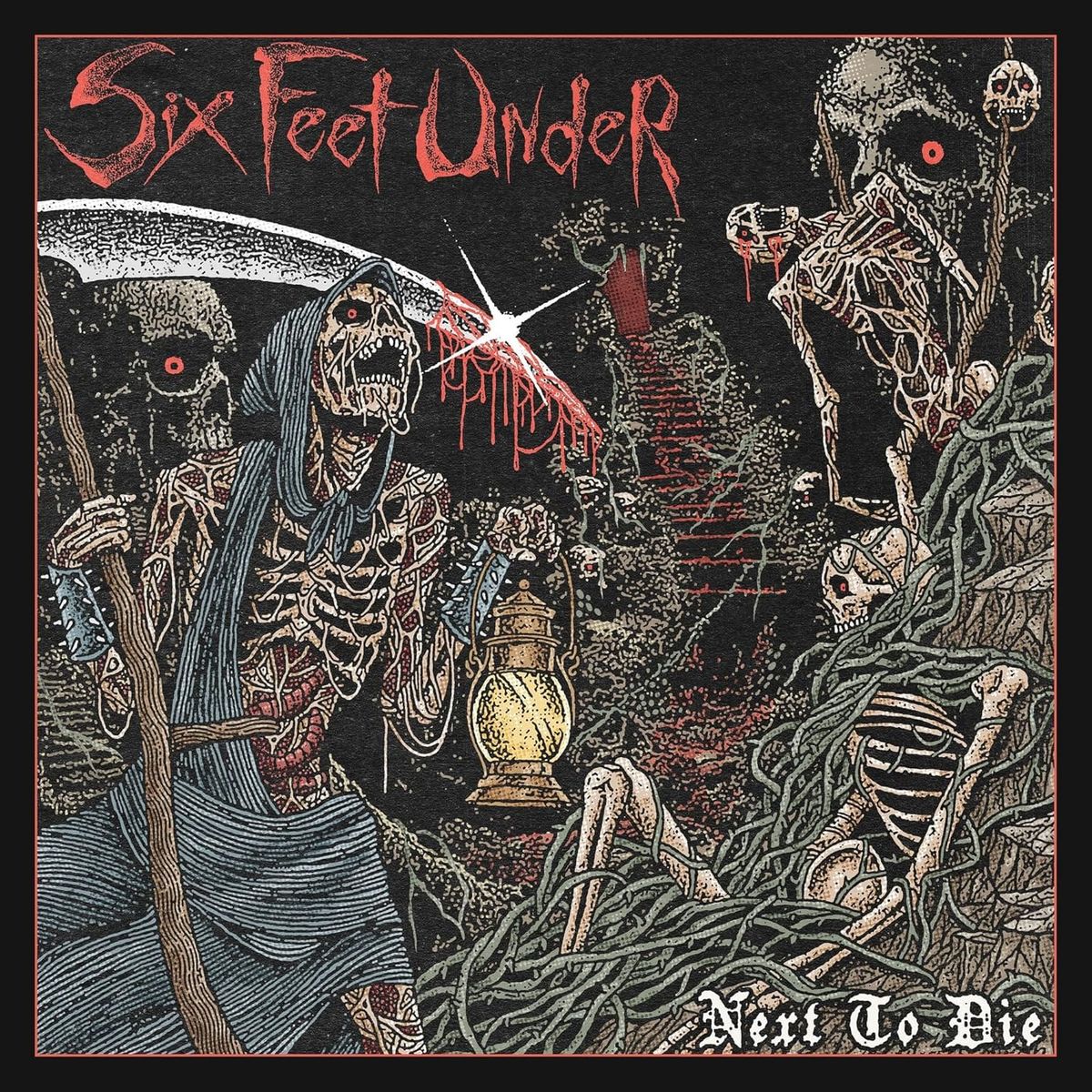
Released: April 24, 2026
Six Feet Under have spent most of their career existing alongside the conversation rather than inside it. The criticism is well established—an uneven catalogue, lyrics that rarely reach beyond their function, and Chris Barnes carrying a legacy that’s followed him longer than most careers last. None of that has slowed the band down. The records kept coming, the audience stayed with them, and over time they settled into something more durable than the discourse around them suggests.
Next to Die doesn’t attempt to reframe that history. It works within it.
The lineup matters here. Jack Owen—whose years with Cannibal Corpse still shape how his playing is read—has been part of Six Feet Under long enough to feel embedded rather than borrowed. His influence carries through the record’s structure, which splits deliberately between two modes: faster, more direct death metal, and the slower, groove-heavy approach that defined the band’s early identity. It’s a simple decision, but it gives the album shape. Without it, these twelve tracks risk blurring together.
“Approach Your Grave” opens at a slower pace than expected, leaning into weight before momentum. It holds back longer than most openers would, setting a tone that the record doesn’t immediately follow. That shift comes with “Destroyed Remains,” which moves faster and more directly, with Marco Pitruzzella’s drumming cutting cleanly through the changes. Barnes sounds more forceful here than he has in recent years, less detached, and more present in the delivery.
“Mister Blood and Guts” strips things down to their core—short, blunt, and finished before it has time to stall. “Mutilated Corpse in the Woods” leans into Owen’s riff work, alternating between faster passages and slower sections without losing cohesion. “Unmistakable Smell of Death” stands out in the first half, the guitar work breaking its own patterns just enough to keep the track from settling into repetition.
The record shifts with “Skin Coffins,” marking the move into the more groove-driven side. It’s the most polarizing moment here—intentionally simple, looping its central idea until it either locks in or wears thin. It’s also where the album feels least focused, even if the intent is clear.
“Mind Hell” and “Naked and Dismembered” bring things back to a tighter frame—short, controlled, and direct. “Grasped from Beyond” adds a late surge of energy before the title track settles into a mid-paced rhythm that holds without pushing outward. “Ill Wishes” closes the record the same way it began—slow, heavy, and without embellishment. There’s no attempt to elevate the ending beyond the material itself.
The production follows that same approach. It’s dense and functional, with the guitars carrying most of the weight and little interest in refinement beyond clarity. Barnes remains a fixed point—his voice unchanged in ways that will either anchor the record or limit it, depending on where you stand. Owen and Ray Suhy provide enough variation to keep the guitar work from flattening, while Pitruzzella’s drumming adds precision that the songs don’t always demand but consistently benefit from.
Next to Die doesn’t argue for reevaluation. It doesn’t try to convert anyone who made up their mind years ago. What it does is hold its structure from start to finish, delivering exactly what it sets out to without overreaching. For the audience that stayed, that’s likely enough. For everyone else, it remains easy to pass by.