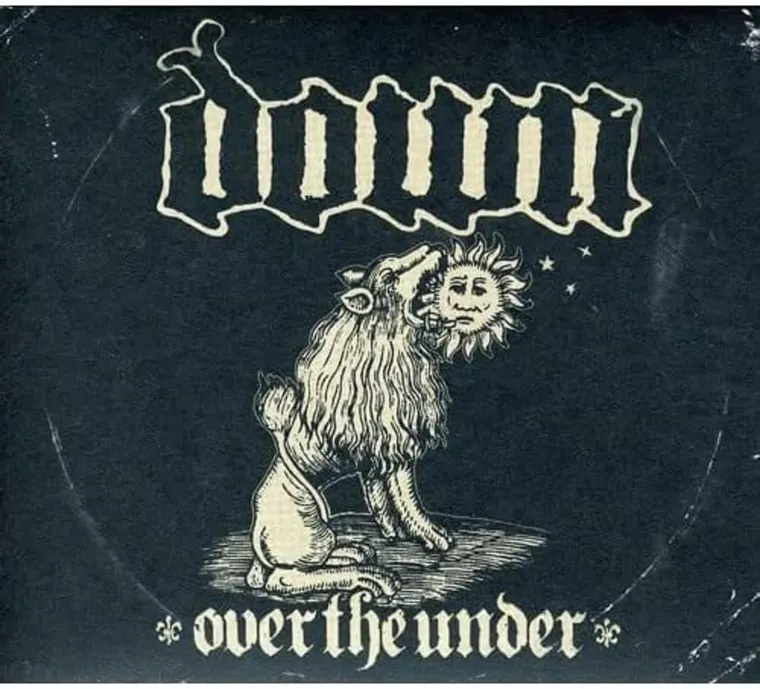
Originally Released: September 25, 2007
Remastered Album Released: June 19, 2026
Down never sounded like a clean band.
That is the point. The riffs are swampy. The vocals are cracked open. The whole thing feels like humidity, smoke, grief, and amps pushed too hard. Even when the songs get big, they still sound like they crawled out of somewhere low.
That makes Over the Under hit differently now.
The question is simple: what happens when a band known for heavy grooves makes an album that sounds like survival?
That is this record.
Originally released in 2007 and remastered in 2026, Over the Under sits in a rough place. Hurricane Katrina hangs over it. Dimebag Darrell’s death hangs over it. Phil Anselmo’s own damage hangs over it. The album does not need to explain every bruise. You can hear them.
“Three Suns and One Star” opens with that Down thing right away: a thick riff, slow burn, Southern metal stink, and Anselmo sounding like he is dragging himself through the song on willpower. It does not come in trying to impress anybody. It comes in like the room is already full of smoke.
“The Path” gives the album more of its wounded side. Pepper Keenan and Kirk Windstein know how to make a riff feel heavy without just turning it into a brick. There is movement in it. Blues under the sludge. Pain under the muscle. That is one of Down’s best tricks. They can sound huge and beat-up at the same time.
“N.O.D.” is where the remaster helps the record breathe a little more. The groove still has that nodding, half-lit feeling, but the shape of the band comes through cleaner. Rex Brown’s bass matters there. Jimmy Bower’s drums matter there. Down are not just a pile of big names. On this record, they sound like five guys pushing the same damaged machine forward.
“On March the Saints” is the obvious anthem, but it works because it does not feel shiny. The title alone carries a lot. New Orleans is represented in the song without the band making it feel like a postcard. It sounds like pride after disaster. Not victory. Not healing. More like standing up because staying down is no longer an option.
That difference matters.
Over the Under is not a happy recovery record. It is too angry for that. “I Scream” and “Never Try” keep the frustration near the surface. Anselmo does not sound smooth here, and he should not. His voice cracks, pushes, and spits. Sometimes it sounds like he is fighting the song. Sometimes that is exactly what makes it work.
“Mourn” is one of the album’s most decisive moments because it lets the grief slow down. Down are great when they stomp, but they are usually more dangerous when they let the sadness sit in the room. The guitars do not rush to fix anything. They just hang there.
“Beneath the Tides” keeps that darker pull going. The song feels sunk, which fits the album’s whole mood. This is heavy music with water damage. The riffs are still strong, but there is rot in the wood. That is why the album lasts. It does not treat heaviness like a pose. It sounds lived in.
Then there is “Nothing in Return (Walk Away).”
That closer is the real heart of the record. It stretches out, takes its time, and lets the band sound exhausted without sounding empty. Anselmo sounds less like a frontman there and more like someone staring at the wreckage, trying to decide what part of himself is still usable.
That is where Over the Under becomes more than a Down record with big riffs.
It becomes a document.
The 2026 remaster does not change the album’s personality. Good. It just brings more air to the mud. The guitars still grind. The drums still hit. The whole thing still sounds like it has dirt under its nails. The bonus track “Invest in Fear” fits because it does not feel like a random extra. It belongs to the same bitter weather.
That is the strength of this album.
Down are not reaching for the loose, legendary smoke of NOLA here. They are not trying to recreate the barn-stoned chaos of Down II. Over the Under has its own job. It takes the band’s groove, grief, anger, and Southern heaviness, then turns them into something battered and stubborn.
So what happens when a band known for heavy grooves makes an album that sounds like survival?
You get Over the Under.
A record that does not clean up the damage.
It digs through it with both hands.
Written by Rob Joncas
Founder of DeadNoteMedia — album writing built on music, memory, and meaning.
