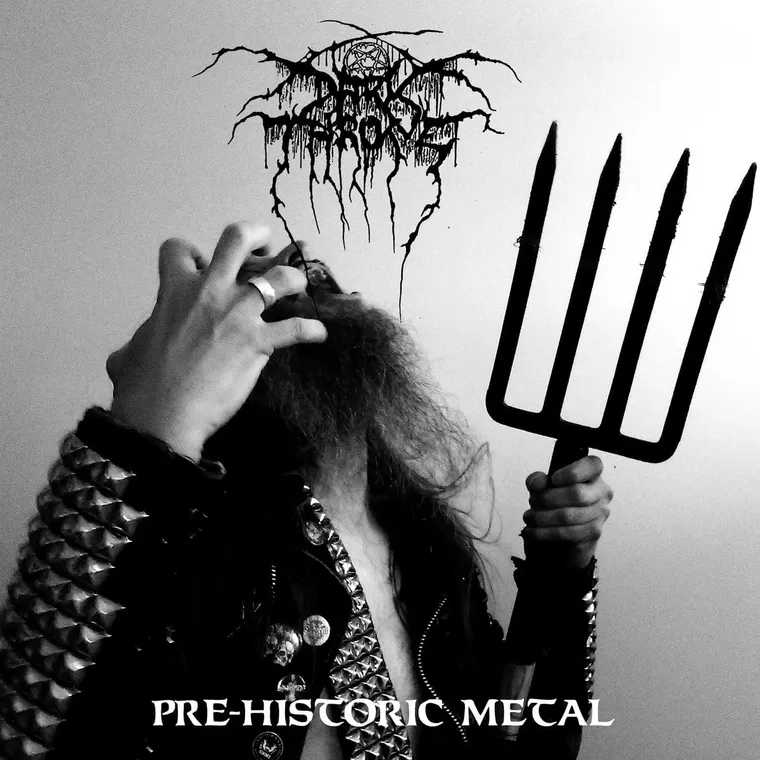
Released: May 8, 2026
Darkthrone reaching forty years without settling into nostalgia might be the least surprising thing about them. Fenriz and Nocturno Culto have spent the better part of two decades refusing to behave like custodians of their own legacy, even while carrying one of the most influential catalogues in extreme metal behind them. Pre-Historic Metal, the band’s twentieth studio album, continues that refusal almost stubbornly. Released only a year after It Beckons Us All, it arrives with the same core philosophy intact: riffs first, polish last, and absolutely no interest in meeting expectations that stopped mattering to them years ago.
The frustration some listeners still carry toward modern Darkthrone is understandable, but it also feels increasingly misplaced. The band already made A Blaze in the Northern Sky and Transilvanian Hunger. Those records exist. Recreating them was never the point of what followed. Over the last several albums, Darkthrone have moved further into a sound shaped less by black metal orthodoxy than by the broader history of underground heavy music itself—Celtic Frost, Bathory, Hellhammer, early thrash, traditional doom, and whatever other influences Fenriz happened to be obsessing over at the time. The result is increasingly personal rather than genre-bound.
“They Found One of My Graves” opens the album at a deliberate mid-pace, built around riffs that settle rather than strike. Nocturno Culto’s voice sounds worn in the best possible way, sitting naturally against guitar tones that feel recorded in physical space instead of assembled digitally. The title track follows as the album’s strongest moment, moving with a heavy, unforced confidence that only really comes from musicians who no longer feel compelled to prove anything. The riffs land with weight rather than technicality.
“Siberian Thaw” slows the record further and becomes its most expansive piece, unfolding patiently without trying to manufacture momentum where none is needed. The pacing remains controlled throughout, trusting atmosphere and repetition to carry the track rather than dramatic shifts.
“Deeply Rooted” and “The Dry Wells of Hell” keep the middle section moving without dramatically changing the formula. Both rely on central riff structures more than arrangement complexity, but that consistency feels intentional rather than lazy. Fenriz’s clean vocal contributions will continue dividing listeners the same way they always have, though dismissing them outright misses the broader aesthetic Darkthrone are pursuing. The roughness is part of the point. So are the unpolished production and the refusal to sand away awkward edges for accessibility.
“So I Marched to the Sunken Empire” drifts furthest into atmosphere, slowing toward something close to funeral doom at points without fully abandoning the band’s core momentum. It’s also the track most likely to linger after the album ends, partly because it allows more space than anything surrounding it.
“Eat Eat Eat Your Pride” briefly sharpens the aggression again before “Eon 4” closes the album. The ongoing “Eon” sequence—beginning back on Eternal Hails...—continues—continues functioning somewhere between recurring mythology and private amusement, which suits Darkthrone perfectly. The closer itself is unhurried and heavy, ending the record without escalation or spectacle.
The production follows the same instinct guiding the songwriting. The guitars dominate the mix naturally, the drums retain their live room feel, and nothing sounds corrected into sterility. The album values texture and instinct over precision. Whether that feels refreshing or frustrating depends almost entirely on whether the listener expects refinement from a band that has spent decades actively resisting it.
Pre-Historic Metal is unlikely to reconnect with anyone who abandoned Darkthrone years ago, and it makes no attempt to. What it offers instead is another deeply committed entry in a late-career run defined less by reinvention than by freedom. Fenriz and Nocturno Culto stopped trying to belong to black metal a long time ago. At this point, they sound far more interested in preserving the feeling that made them fall in love with heavy music in the first place.
