There are few things more surreal than realizing the music that soundtracked your teenage years is now the soundtrack to your adulthood. The Vans may be a little more worn, and the responsibilities considerably more chaotic, but the impact some bands have on you remains remarkably intact. That was the spirit hanging over TD Coliseum as Bring Me The Horizon took the stage for their first-ever Hamilton, Ontario show, transforming an arena full of longtime metal fans into something that felt less like a conventional concert and more like an elder-emo homecoming.
For me, though, the night carried an even more personal significance. Bring Me The Horizon wasn’t simply another band I grew up listening to; they were a staple of my teenage years, woven into the soundtrack of a period when I first realized that music could be so much more than music. It could become a sense of identity, a source of community, and an outlet for emotions that were sometimes impossible to put into words.
Long before I ever had a camera in my hands at a concert, I remember looking at photographs other photographers had taken of Bring Me The Horizon performing. I’d see images of frontman Oli Sykes beneath the stage lights, caught mid-scream and surrounded by smoke and chaos, and wonder what it would feel like to one day be the person standing in that photo pit. At the time, it felt like an almost impossible dream. Those photographs represented a world I desperately wanted to be part of, but couldn’t yet imagine myself entering. Funny how imposter syndrome works, right?
Years later, standing there with my camera in my hands, that dream finally became a reality.
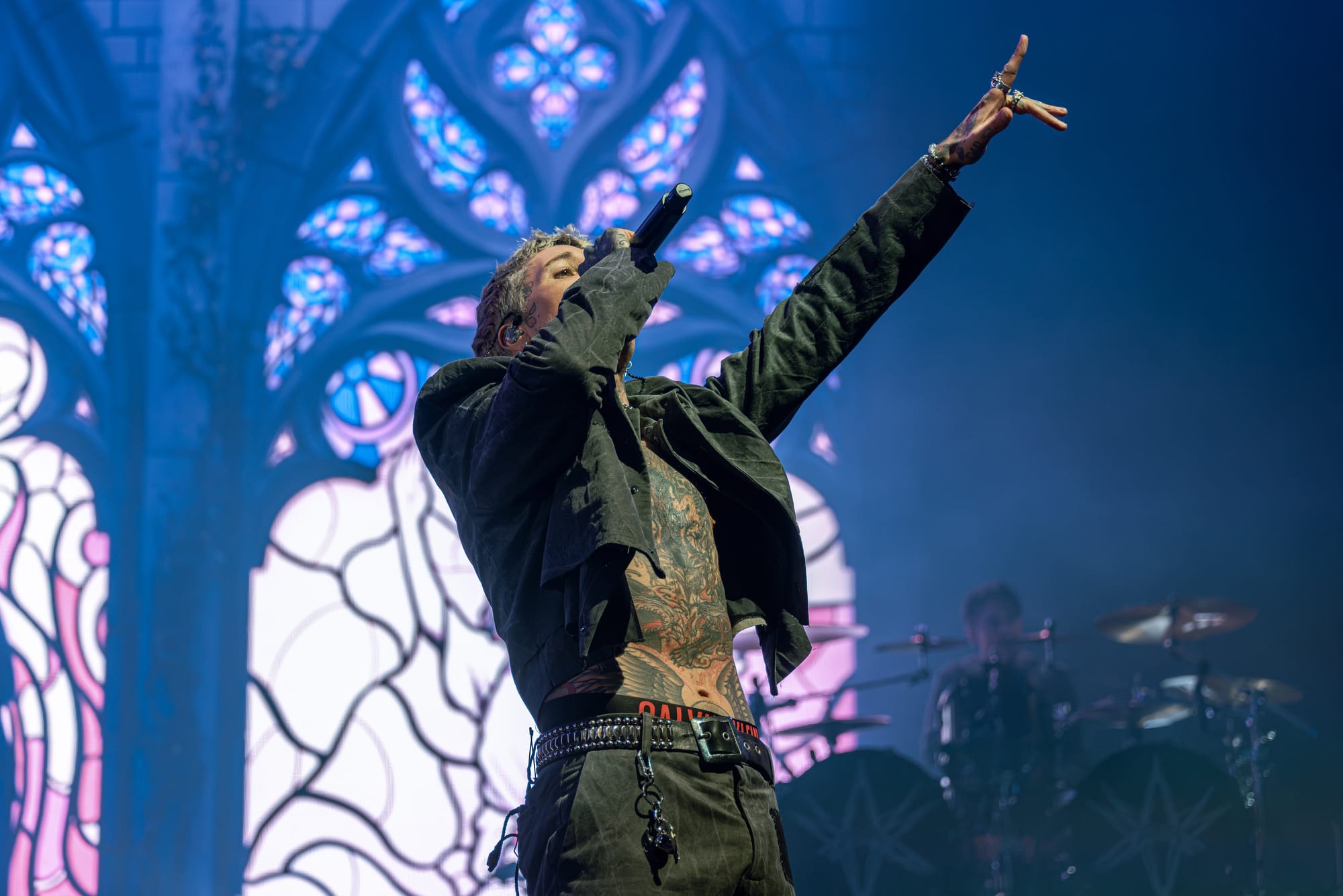
There was something almost surreal about experiencing the show from both sides of that memory. I wasn’t just watching a band that had been such an important part of my teenage years; I was photographing them. The same kinds of images I had once admired from a distance were now images I had the opportunity to create myself. For a photographer, there are certain assignments that feel like work, and others that feel like a full-circle moment. This was, without question, the latter.
With The Plot in You and Motionless in White setting the stage, the night became a celebration of a generation that grew up on metalcore, post-hardcore, and the darker corners of alternative music. These were fans who had spent their formative years discovering bands through burned CDs, music blogs, MySpace pages, and battered iPods — only to find themselves years later standing shoulder-to-shoulder in an arena, watching those same bands command thousands of people. Bring Me The Horizon may now operate on the scale of a high-tech arena spectacle, but the emotional core of the evening remained firmly rooted in where so many of these fans came from.
The Plot in You wasted no time establishing that atmosphere. Rather than gently easing the crowd into the evening, the band dropped them straight into the deep end with a set built on aggression, atmosphere, and emotional weight. Frontman Landon Tewers was particularly impressive, moving effortlessly between throat-shredding screams and soaring, cleaner melodies. Their curated setlist showcased the band’s ability to shift between crushing heaviness and more vulnerable territory without ever losing momentum.
The band’s dark lighting and punishing breakdowns helped set the mood for the evening ahead. By the time ‘Left Behind’ and ‘FEEL NOTHING’ brought their set toward its conclusion, the floor had transformed from a waiting crowd into a wall of movement and noise. The Plot in You didn’t just warm up the audience; they woke it up.
Setlist:
- Don't Look Away
- Divide
- Spare Me
- You Get One
- Forgotten
- Silence
- Left Behind
- FEEL NOTHING
Motionless in White took that energy and pushed it somewhere considerably more theatrical. When the lights dropped and Chris Motionless emerged, the arena was already buzzing with screams, and the band immediately leaned into the gothic, industrial side of their sound. There was a deliberate sense of drama to everything they did, from the horror-inspired visuals to the aggressive strobe lighting, yet the performance never felt like style without substance.
Songs such as ‘Sign of Life,’ ‘Playing God,’ and ‘Afraid of the Dark’ demonstrated the band’s knack for pairing enormous riffs with melodic hooks practically designed for arena sing-alongs. ‘Slaughterhouse’ was one of the night’s most chaotic moments, turning the floor into a swirling mass of bodies, while ‘R.I.P.’ and ‘Scoring the End of the World’ kept the momentum high. By the time ‘Another Life’ and ‘Eternally Yours’ closed the set, Motionless in White had made it abundantly clear that the headliners would have to bring something extraordinary to top what had just happened.
Setlist:
- Sign of Life
- Playing God
- Afraid of the Dark
- Voices
- Slaughterhouse
- R.I.P.
- Scoring the End of the World
- Another Life
- Eternally Yours
Of course, Bring Me The Horizon had plenty in reserve.
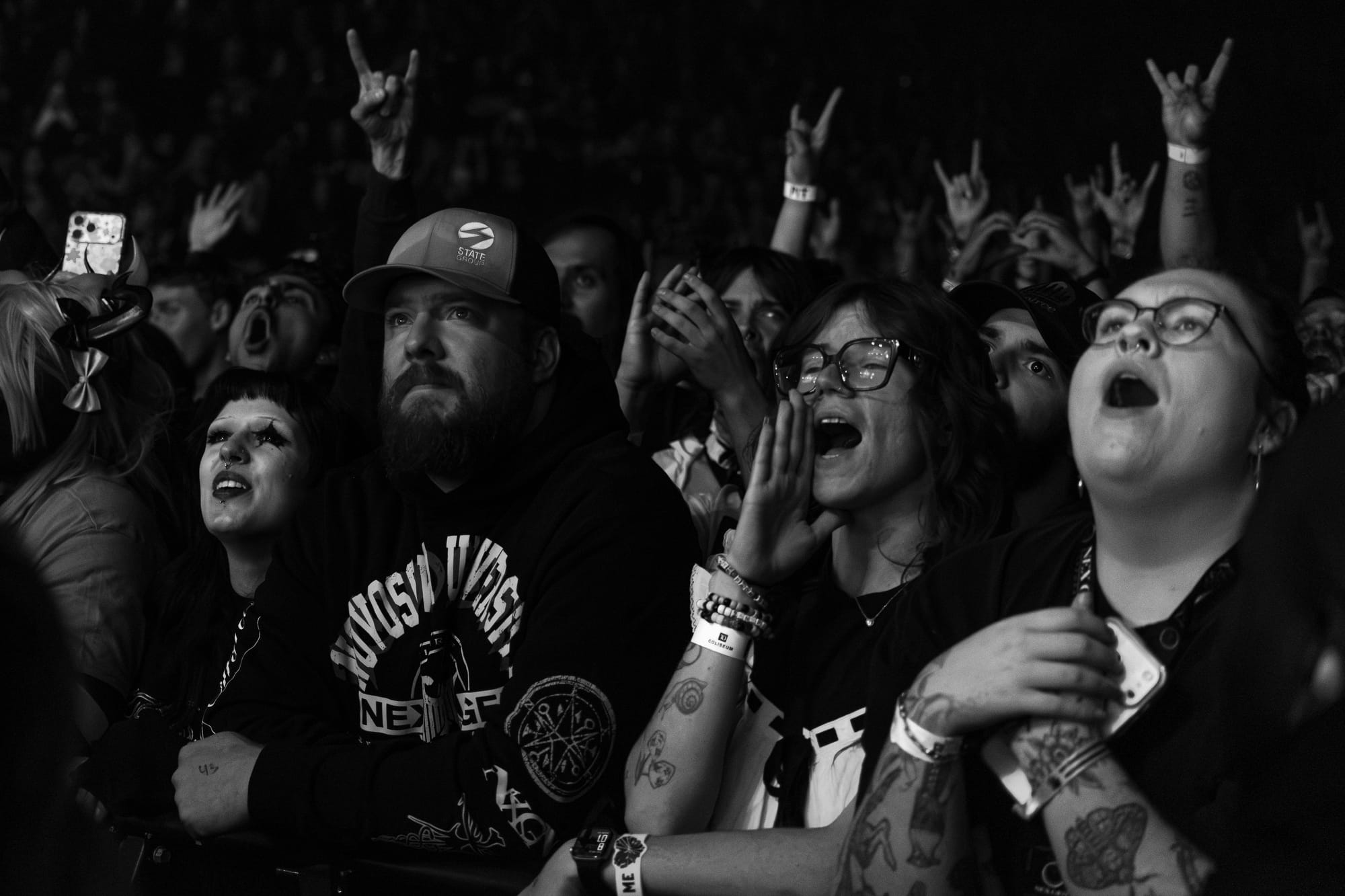
The most striking thing about the crowd wasn't simply how large it was. It was how familiar it felt. A sea of black clothing, old band shirts, eyeliner, and well-loved Doc Martens and Vans filled the building. There was something almost communal about it. The people in the room had grown up with this music, and many had grown up alongside the bands themselves.
That’s what makes the “elder emo” label so fitting. It’s funny on the surface, but underneath the joke is something genuine: this is a generation that never really abandoned the music that helped define them. They simply got older, kept listening, and found themselves experiencing those lyrics differently along the way. Some now have careers, mortgages, children, and considerably more responsibilities than they did when they first discovered Bring Me The Horizon. Yet when the opening notes of a song like ‘Shadow Moses’ rang through the arena, all of that outside noise seemed to disappear.
Bring Me The Horizon has changed dramatically since their earliest deathcore releases, and their ability to evolve without completely abandoning their past has become one of their greatest strengths. Their performance reflected that evolution. The set moved comfortably between newer material and songs that transported longtime fans straight back to their angsty teen years.
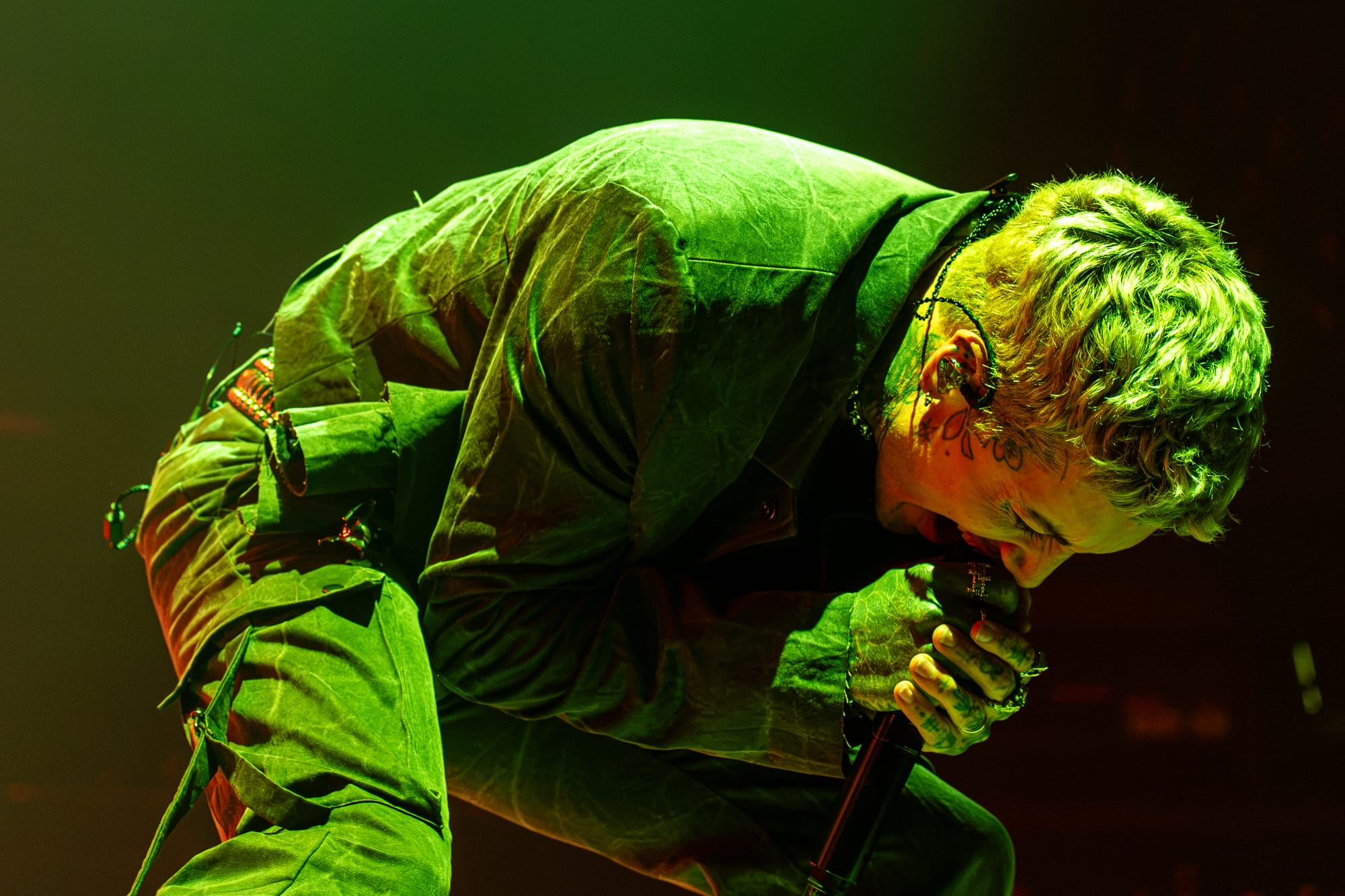
When Oli Sykes unleashed the band's old-school pig squeals, the reaction was immediate. There was a sense of disbelief among longtime fans — a realization that the band responsible for some of their earliest heavy-music memories was standing in front of them, still capable of delivering that same visceral aggression while commanding an arena on a completely different scale.
‘Dehumanized’ was perhaps the clearest example. The song brought the unrelenting brutality associated with Bring Me The Horizon's early years into a much larger, modern production. The pit responded accordingly to Sykes’ instructions, erupting into utter chaos.
The nostalgia never overwhelmed the newer material, though. ‘Happy Song’ had the entire arena bouncing, while ‘Kool-Aid’ hit the crowd with an undeniable force. ‘DArkSide’ and ‘MANTRA’ kept the newer, more genre-fluid identity of the band firmly at the centre of the show, demonstrating why Bring Me The Horizon have been able to move beyond the confines of traditional metalcore without losing the audience that helped build them.
And then there was the production.
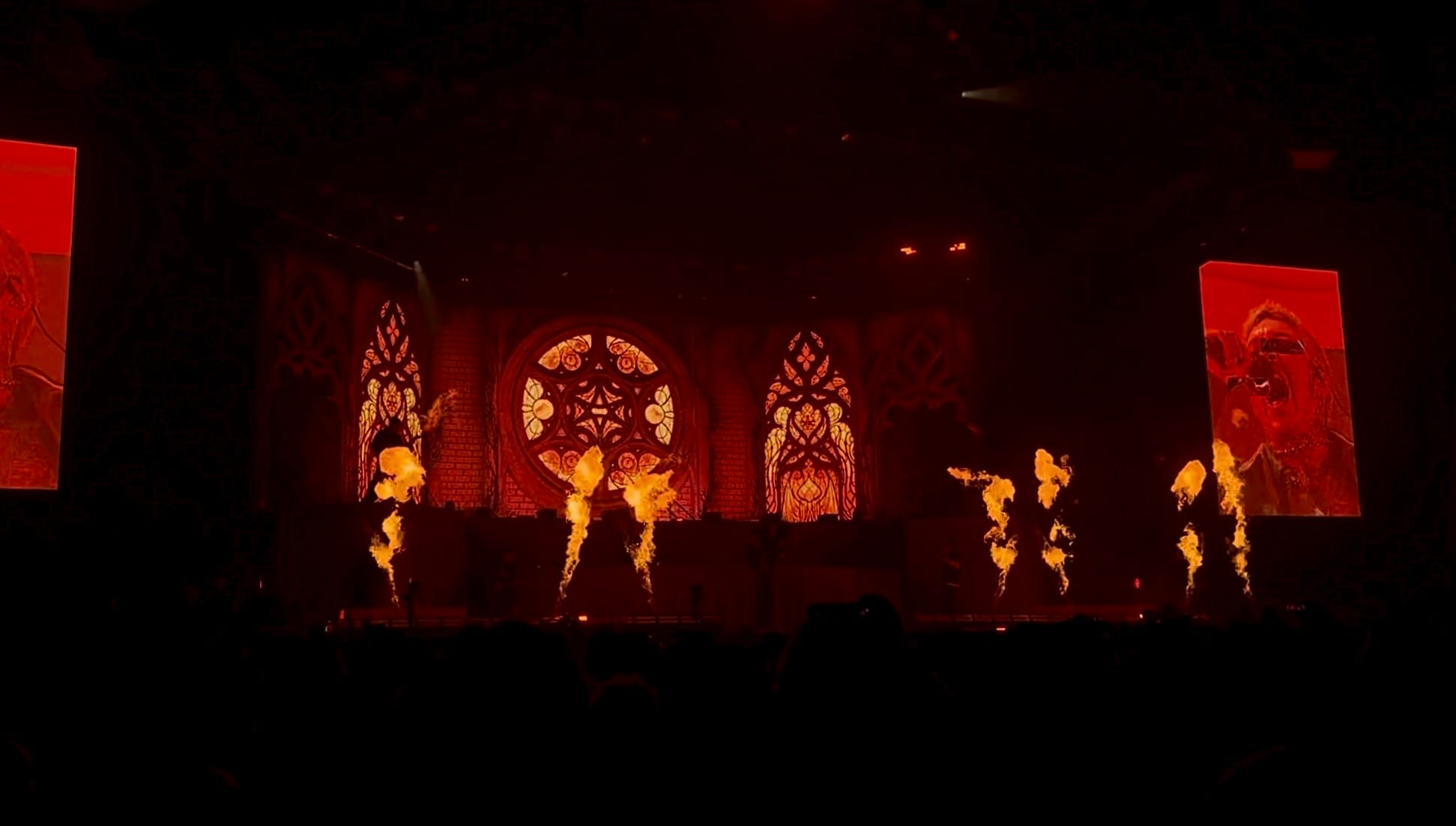
At this point, calling what Bring Me The Horizon do a “concert” almost feels like underselling it. They have built an entire universe around the performance, one that blurs the line between a live show and an interactive digital experience. A digital character named Eve serves as a guide throughout the night, while massive LED screens cycle through video-game-inspired visuals, glitching graphics, and strange futuristic environments. Smoke, pyrotechnics, strobes, lasers, and bursts of confetti hit with such precise timing that even the most chaotic moments feel meticulously choreographed.
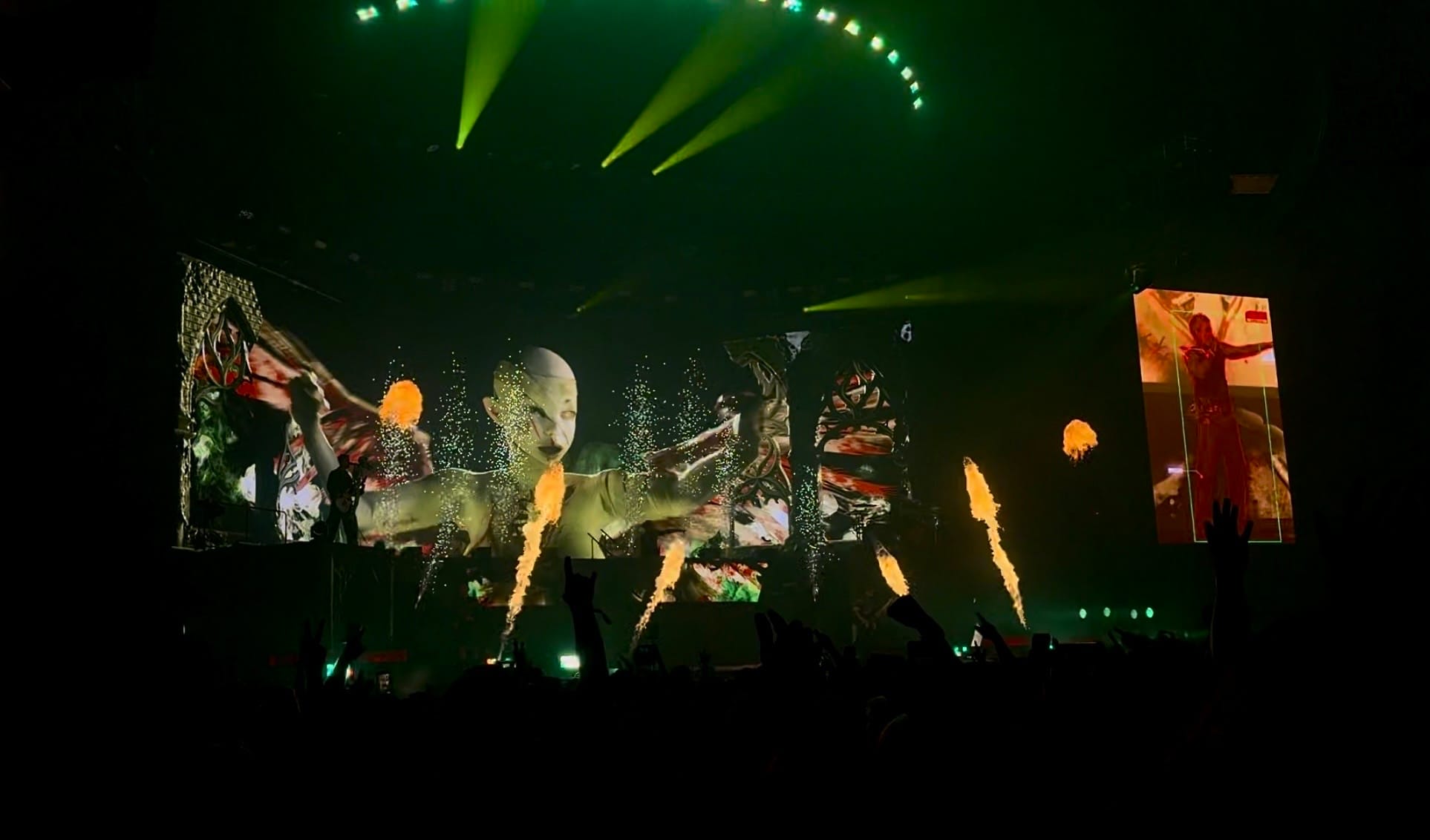
The stage itself adds another dimension, with multiple levels giving the band plenty of room to move and allowing the video production team to create constantly changing visual perspectives. Combined with the enormous screens surrounding them, the production makes the entire arena feel less like a room where a concert is happening and more like another piece of the world they have created. At its most ambitious, the show resembles a full-scale science-fiction production. But for all its technology and visual excess, the music remains the primary focus. Every screen, light, and explosion serves the songs rather than competing with them.
That balance was particularly effective during ‘Can You Feel My Heart,’ when the room seemed to transform from a massive arena into a collective sing-along. ‘Follow You’ offered another shift in tone, trading some of the night's aggression for something warmer and more intimate. ‘Drown’ had a similar effect, its massive chorus being carried almost as much by the audience as by Sykes himself.
The emotional high points kept arriving in waves. ‘Doomed’ brought a darker, atmospheric weight to the middle of the performance, while ‘Kingslayer’ injected another dose of frantic energy. And then came ‘Pray for Plagues,’ a particularly wild callback to the band's earliest days, complete with a fan in a maid costume named Aaron joining the band to perform alongside Sykes.
There was something fitting about the entire evening being so simultaneously ridiculous and sincere. Bring Me The Horizon have never been afraid to take themselves seriously while also embracing the absurdity of heavy music culture.
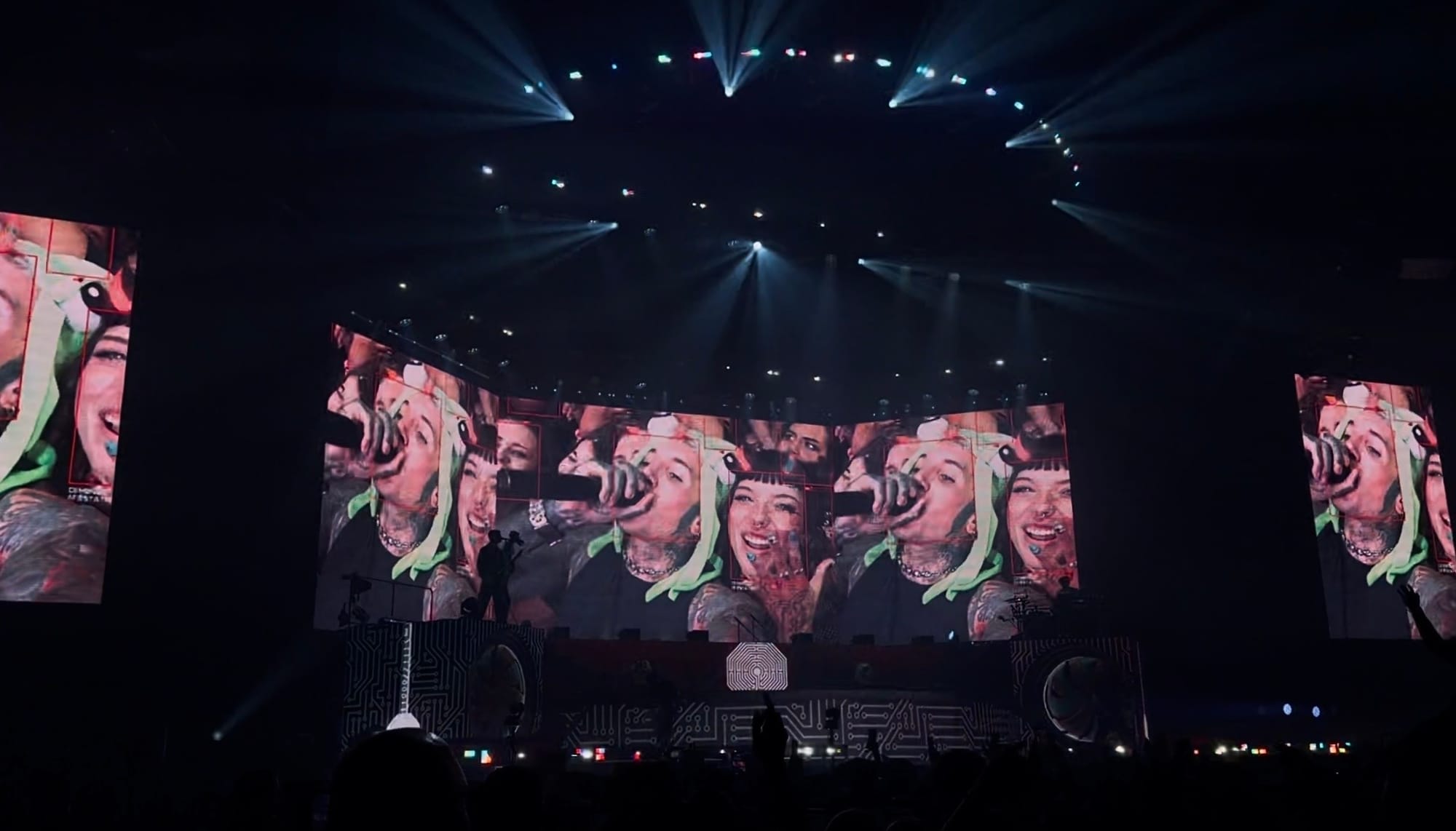
The closing stretch of ‘Drown’ and ‘Throne’ delivered the kind of massive, cathartic finale an arena show demands. By then, the crowd had been taken through nostalgia, aggression, theatrical visuals, and genuine emotional release. People screamed until their voices gave out, jumped and moshed until their legs were exhausted, and sang along to songs that had carried them through some of their darkest moments — with tears in their eyes.
When the house lights finally came up, the exhaustion was obvious, but so was the utmost satisfaction that could be seen on everyone's faces.
Setlist:
- DArkSide
- The House of Wolves
- MANTRA
- Happy Song
- Teardrops
- Dehumanized
- Kool-Aid
- Shadow Moses
- Kingslayer
- Pray for Plagues (with a fan named Aaron)
- Follow You
- Can You Feel My Heart
Encore:
- Doomed
- Drown
- Throne
Bring Me The Horizon's greatest achievement may be that they have managed to grow without asking their audience to leave their past behind. They hit longtime fans with one final massive wave of nostalgia when the screens played a montage of behind-the-scenes footage spanning the band’s career, dating all the way back to their earliest days. Watching those old clips unfold in the middle of such a massive, technologically driven production felt like a reminder of just how far they — and their audience — have come without forgetting where it all started.
That made this tour feel like more than another stop on an arena run. It was a reunion of sorts — not necessarily between friends who hadn't seen each other, but between people and the versions of themselves they once were.
The “elder emo” era, it turns out, isn't really about getting older and abandoning the things you loved. It's about carrying them with you. At TD Coliseum, Bring Me The Horizon proved that the music that once filled bedrooms, basements, and small venues can eventually fill an arena with more power than you could even imagine.
The eyeliner might fade. The Vans might fall apart. We might all have considerably more responsibilities now.
But when the breakdown hits, we're still in the pit. As it turns out, it was never just a phase after all.